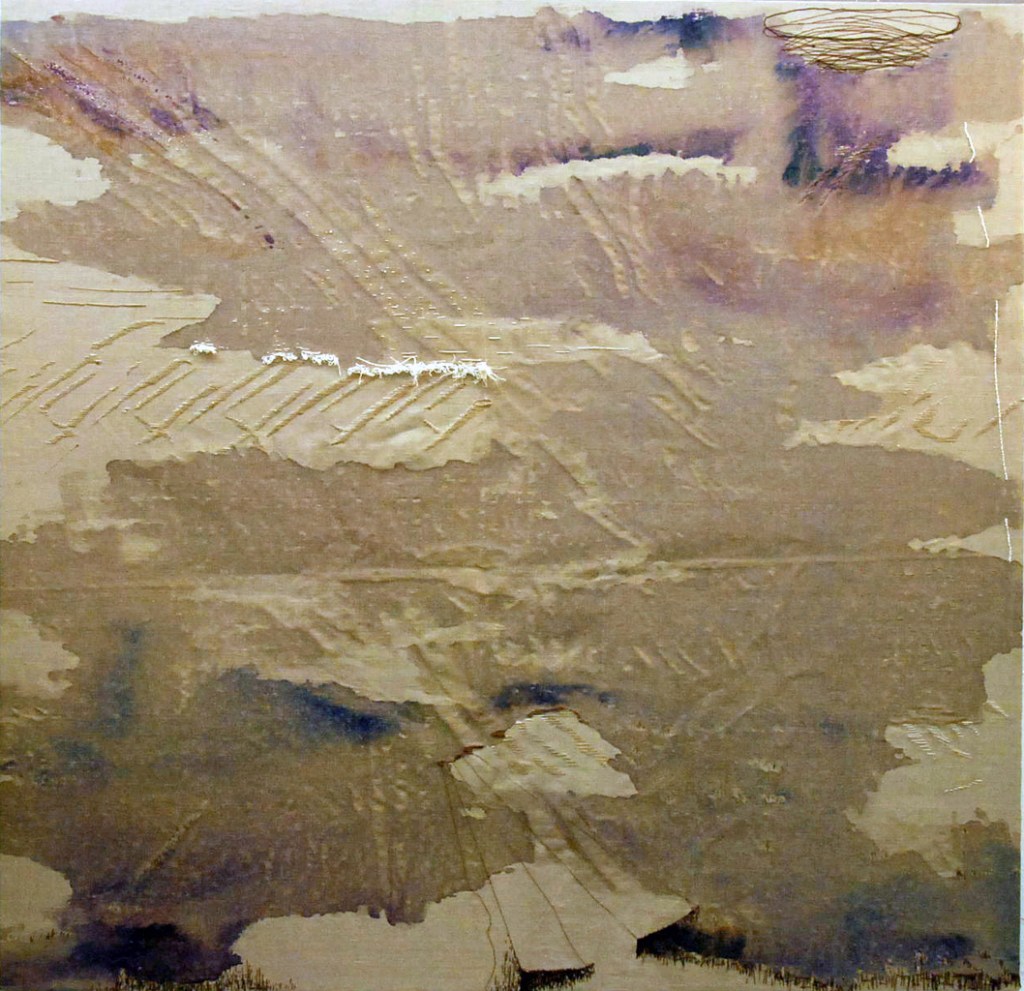
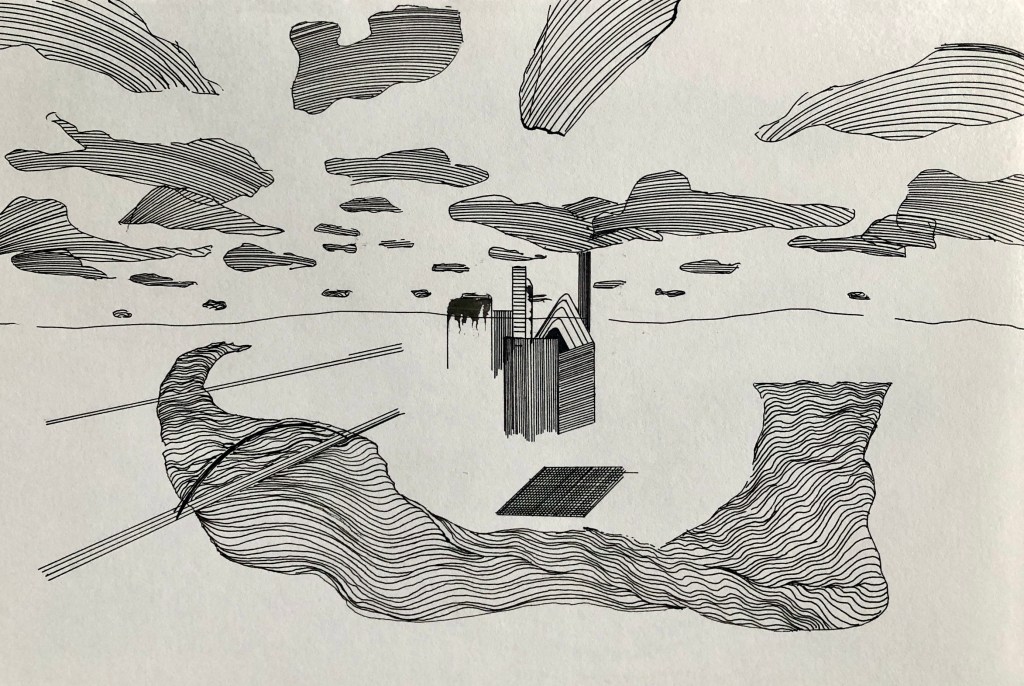
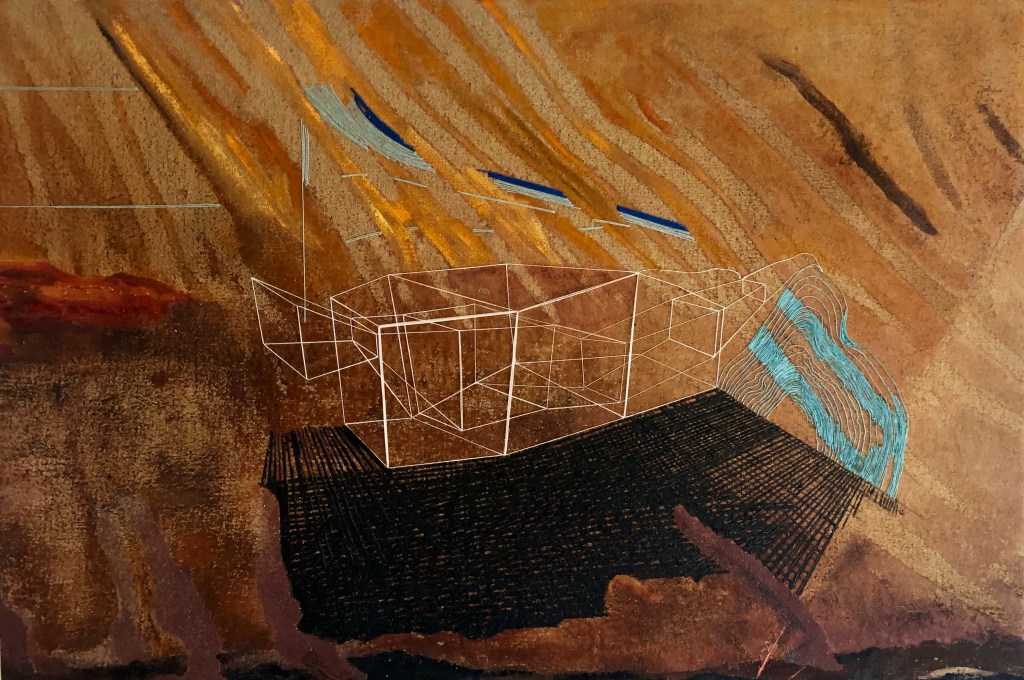
My research and writing on art history has informed my art practice. Through undergraduate studies, I research and gazed at the landscape paintings of Joseph Mallory William Turner and the figurative work of Egon Schiele. William Turner is regarded to be a precursor to the abstract expressionist movement because of his use of poured yellow watercolour paint in the horizon tapping into the affect sensation of being in awe of the power of our environment. He was the master of creating a landscape that expressed the significant power of land and the extremes of climate in relation to human existence. In my graduate studies, I tapped into the expressive quality and power of the pour when I created my Canadian landscapes series “Murmurs” (2011) that explored the effect behind the Canadian women’s phenomenological experience of child-rearing in relation to identity formation. There were eleven grand historical scaled paintings with a colour palette more reminiscent of the Group of Seven married with Schiele’s expressive line quality. Besides studying the formal qualities of both Turner and Schiele, I wrote a paper on the art practice of Egon Schiele and his use of the pathological body within psychology and art at the turn of the twentieth century in Austria. Since then, I divide the ground of two of the eleven paintings from my “Murmurs” series into another eleven paintings. The silk weaves in and out of the landscape expressing another ten years of phenomenological experience of navigating the Alberta Mental Health systems and other social programs in search for assistance for a neurodivergent family member.